
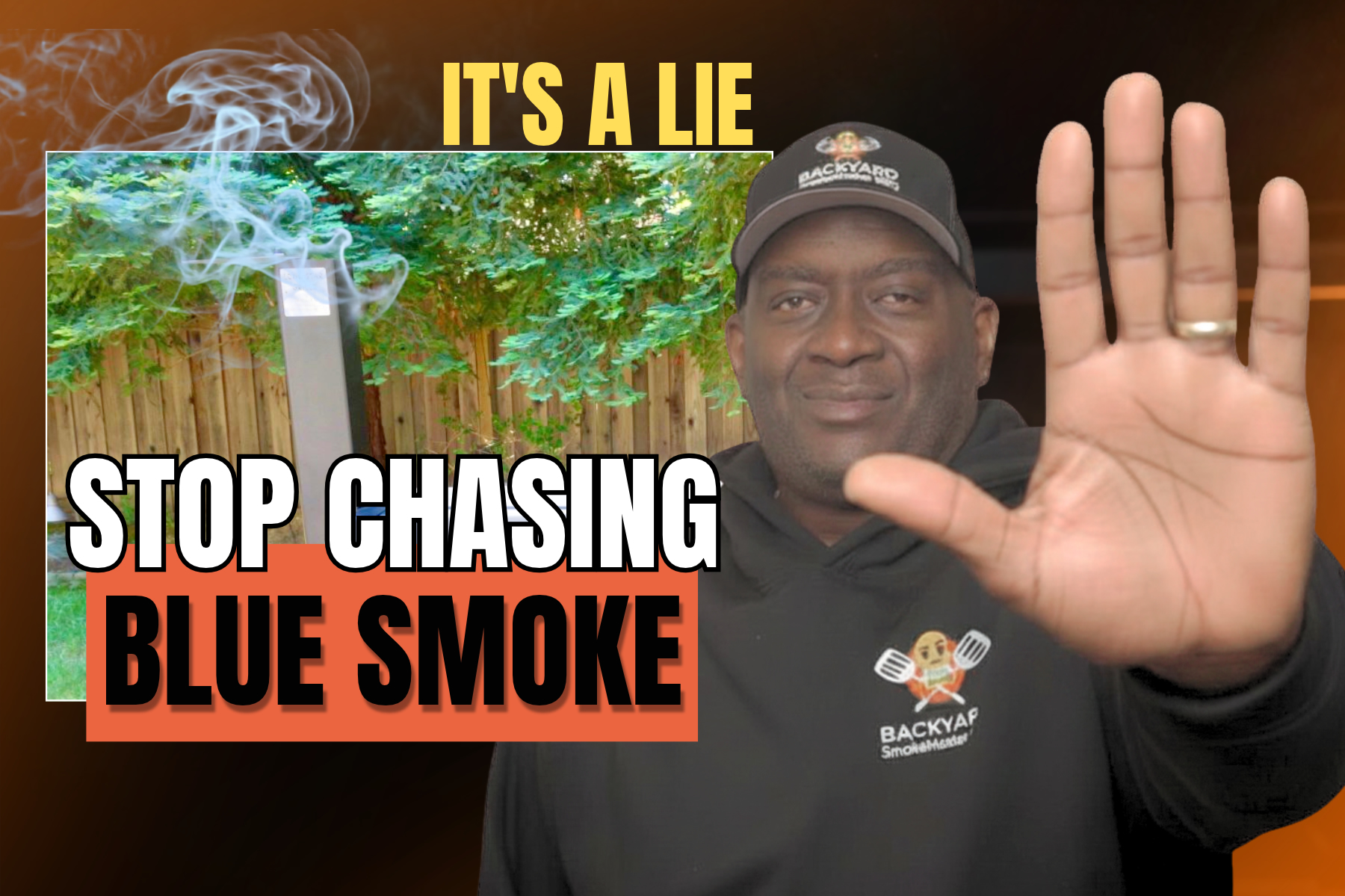
Everybody tells you to chase thin blue smoke. Thin blue smoke is good, white smoke is bad, and a lot of cooks take that to mean the more of that pretty blue haze they can see, the more flavor they’re getting. That advice is half right. Blue smoke isn’t the source of your flavor. It’s the receipt for a clean fire. It tells you that you’re doing it right, but the smoke you can see is doing the least of the flavoring. Episode 116 covers what smoke is, where smoke flavor comes from and how to get more of the good kind.
What smoke is
Smoke is three things at once: gases, liquid droplets and solid particles like soot and ash. The part you see is mostly particles and droplets. The part that flavors the meat is largely the invisible gases. In other words, you can’t see most of what’s flavoring your food.
Smoke flavor is a temperature game
It comes down to how hot the wood itself is burning. I’m talking about the temperature of the fire, not the temperature in the cook chamber. There are four stages, and each one looks different:
- Below 500°F: steam. The wood is smoldering and sweating out moisture. You see thick, billowing white smoke, but most of that is water cooking out of the wood. It looks busy and adds little flavor.
- 500°F to 600°F: the danger zone. The wood starts turning to gas, but the fire isn’t hot enough to burn those gases clean. They condense into soot and creosote. The smoke is heavy, dirty white to gray, often with a yellowish tinge. This is the bitter, tongue-numbing coating nobody wants. If your smoke is thick enough to write your name in, that isn’t flavor.
- 650°F to 750°F: the sweet spot. Dr. Greg Blonder calls this the burning bush phase. The wood breaks down just right and releases the compounds that give barbecue its sweet, smoky taste. It’s also where the fire makes the gas that builds a smoke ring. The smoke is thin, wispy, faintly blue and nearly see-through. You almost have to look for it.
- Above 750°F: too hot. The fire has blown past the sweet spot and those aromatic compounds get destroyed. You see roaring flames, a heat shimmer and almost no smoke at all.
That last stage is the trap. A fire that’s too hot looks clean, so clear smoke could mean you’ve nailed the sweet spot or that you’ve burned off your flavor. Real Meatstick put it this way in the chat: a fire that’s too efficient is good for heat but lacks flavor. He also pointed out that white smoke early on is mostly humidity, and that chocolate brown smoke is the real warning sign.
Your thermometer doesn’t measure smoke quality
The thermometer on your cooker tells you the chamber temperature. It doesn’t tell you how your wood is burning. If the fire is roaring past the sweet spot, the gauge will usually climb past 275°F, and that’s a useful clue. The flip side is the bigger trap. You can sit at a perfect 250°F all day while the wood smolders and coats your meat in bitter creosote. You manage temperature with your gauge. You manage flavor with fire size, airflow and your eyes.
Smiling Family asked how to measure the fire’s temperature. Realistically, I don’t think you can do it safely with backyard tools, which is why the visual cues matter so much. Oasis Builder wondered about pointing an infrared thermometer at the smoke leaving the stack. Another viewer answered that one: infrared thermometers can’t read the temperature of a gas.
Where smoke flavor really comes from
Flavor comes from two sources, and a third factor decides how much of it sticks.
- The wood. Burning in the sweet spot, it gives off the clean smoke you want.
- The drippings. Fat and juices drip onto the hot coals or the deflector plate, vaporize and rise back up to season the meat. Your brisket is basting itself in flavor.
- The surface of the meat. Smoke compounds cling to a wet, tacky surface. If the surface is dry, far less of the smoke sticks. A spritz, or starting with a cold, moist surface, helps the meat grab more smoke early in the cook.
This is also why brisket and pork shoulder tend to taste smokier than quick-cooking meats. Thick cuts on long cooks spend more hours with their surface in the smoke.
The smoke ring is cosmetic
I cooked a brisket the weekend before this episode and I was proud of the smoke ring on it. Most of us treat that ring as a badge of honor. The truth is that it doesn’t mean the brisket tastes better than one without it. The ring forms when gases from the fire soak into the meat and lock the pink color in place just under the surface. It’s a chemical reaction.
A better way to read it: a deep smoke ring suggests the fire spent a good long time burning clean. So don’t chase the ring. Chase the fire that makes it.
How to get great smoke flavor
- Build a small, hot fire, not a big, smoky one. You want the wood burning in that 650°F to 750°F range while the cook chamber stays at low and slow temperatures. A small fire lets you do both.
- Get the fire burning clean before the meat goes on. Don’t rush it. Meat takes on smoke most readily when it’s cold, at the start of the cook, so whatever smoke is in the chamber then is what you’ll taste. Wait for thin blue smoke or close to it.
- Give the fire air. A choked fire can’t burn clean. It smolders and slides into the creosote range. When the temperature runs high, make small vent adjustments, not big ones. Clamping the vents shut is how a lot of bitter barbecue gets made.
- Keep the surface of the meat a little moist. A quick spritz helps smoke stick, especially early.
- Don’t obsess over the type of wood. Oak, hickory, pecan, almond, cherry and apple all work. Some burn hotter than others, but a clean fire with plain oak beats a dirty fire with a fancy wood every time. Use good cooking wood that’s easy to get where you live. For me that’s oak, almond and apple.
- More smoke is not better. You’re seasoning the meat with smoke, not drowning it. Thin and steady wins.
- Use your eyes, not only the gauge. Thick white smoke, a yellowish tinge or chocolate brown smoke usually means the fire needs more oxygen.
More from the chat
- A dry first brisket: one viewer’s first brisket came out very dry. That’s common on a first try. Think back on what you saw during the cook, starting with the chamber temperature. If it ran hot, that’s a likely cause. Look at the brisket during the cook too, and if the surface looks dry, that’s a cue to spritz.
- Brown smoke: The Correctional Officer saw chocolate brown smoke on a recent cook. My instinct there is to open the dampers and get more oxygen to the fire.
- Chunks, not soaked chips: Why Not Grill 55 uses wood chunks and skips chips soaked in water. I agree. Soaked chips mostly smolder.
- Pulling a split: Smiling Family keeps a fire pit near his offset. If the fire runs too hot, he moves a burning split to the pit with fireplace tongs so he can leave the vents wide open. That makes sense for airflow. I’d be careful moving burning wood, and it’s not something I’ve tried.
- Charcoal: Mama Micah and I are both using the B&B briquettes in the newer bag and plan to try the Meat Church briquettes. Remember that charcoal is there for heat. Your smoke flavor comes from the wood.
- Pellets or charcoal: Awesome Tatum is charcoal for life. I think there’s room in the backyard for both, and I’d still tell anyone getting into barbecue to learn to cook with charcoal and wood chunks.
- Poll: I asked whether you believed, before this episode, that more visible smoke means more flavor. 50% said no, they knew it was a clean fire thing. 22% said their mind was blown, 17% said they throw wood on and hope for the best, and 11% admitted to chasing the haze.
One last thing. Every fire is different. The weather, the wind and the wood all change from cook to cook. Give yourself some grace, pay attention to what you see, and cook often.
The recap
- Blue smoke is the receipt, not the recipe. It’s what a clean-burning fire looks like.
- Most smoke flavor comes from gases you can’t see.
- Thick white, gray, yellowish or brown smoke means the fire needs more air.
- No smoke at all with a roaring fire can mean you’ve gone too hot.
- The smoke ring is cosmetic.
- Clean fire plus a moist meat surface is what gets you great smoke flavor.
Keep the conversation going
What does the smoke look like on your cooker, and what are you burning? Post a photo or a short clip of your fire in the Backyard SmokeMaster Society and we’ll help you read it. It’s free to join.
If this episode helped, share it with a friend who’s still chasing the haze. If you missed the live show, the replay is up on YouTube, and the audio version is available on your favorite podcast app.
Podcast: Play in new window | Download

Leave a Comment